
Washed Herbs from India: How We Decide Which Botanicals to Wash
Washing removes soil and microbes. It can also wash away what you are paying for. Here is how we decide, herb by herb.
- Did it grow in soil?
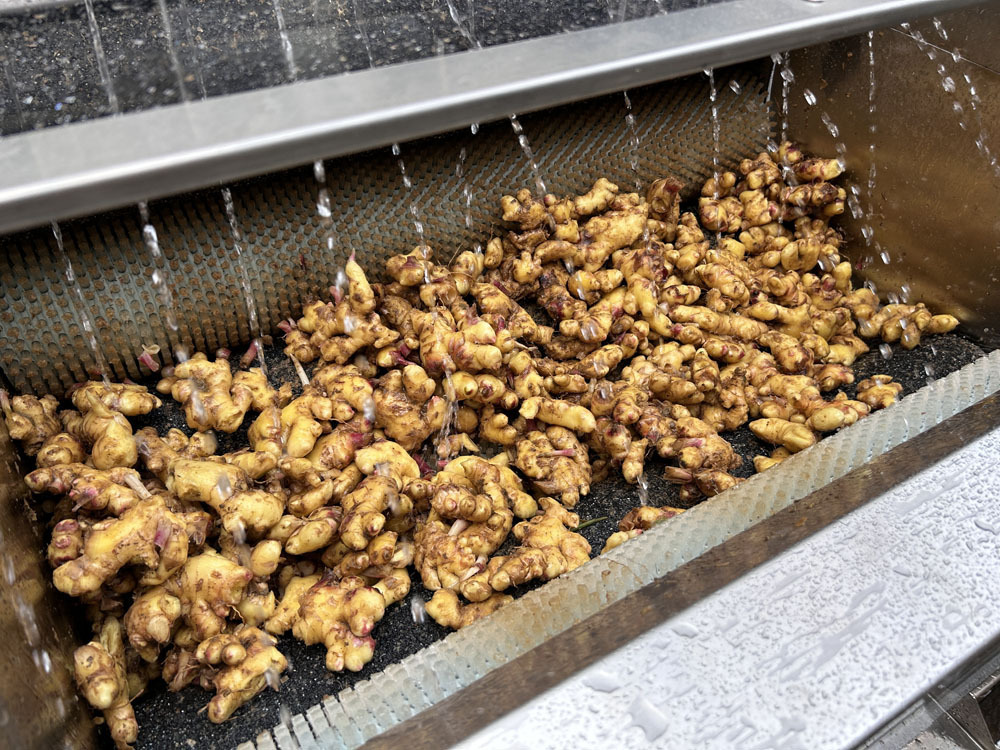
- Roots and rhizomes are washed fresh, soon after harvest, and dried promptly.
- Volatile or water-soluble?
- Less water is better. Aromatic leaves get a light rinse at most; flowers are not washed.
- Already dry?
- No water. Dried material is cleaned with sieves, de-stoners, air and gravity.
Three questions, herb by herb
People often ask if we wash our herbs. The honest answer is: some of them, at the right stage, and in the right way.
Washing removes soil and some microbes. But water can also carry away the very compounds you are buying a botanical for. So we decide herb by herb.
Three questions we ask
Did it grow in the soil?
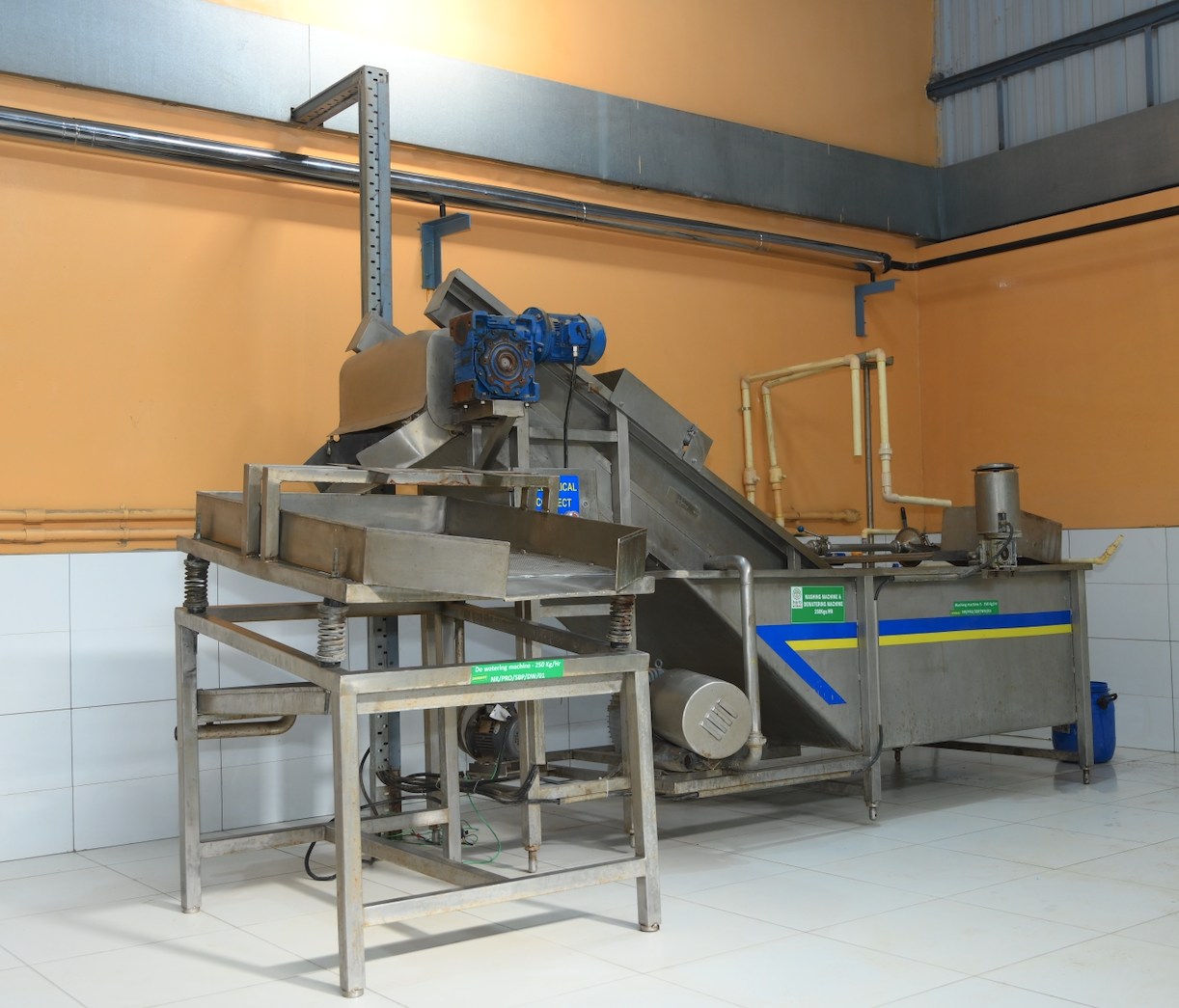
Roots and rhizomes come out of the ground with soil on them. WHO guidance says these are usually washed in clean water, with brushing where needed, without soaking for longer than necessary, and dried soon after harvest.1 That is why we have a washing unit for fresh ginger, turmeric, shatavari and ashwagandha.
Are its key compounds volatile or water-soluble?
Chamomile, tulsi and peppermint keep much of their aroma in tiny oil glands on the surface. Rough handling breaks them.
Other plants hold compounds that dissolve in water. Safflower's yellow pigment washes out; that is how dyers have separated it for centuries.4 Senna's sennosides and licorice's glycyrrhizin are water-soluble too. The same WHO guidance warns that contact with water has to be controlled to prevent excessive loss of active ingredients.1 For these herbs, less water is better.
Is it already dry?
Drying is what keeps herbs and spices stable. The Codex code for spices and dried herbs asks that they be kept where contact with water or moisture is minimized, and it prefers dry cleaning in the facilities that handle them.2
Rewetting a dried herb means drying it again, with fresh risk of mould. So we clean dried material with sieves, de-stoners, air and gravity, not water.
What this looks like in practice
| Approach | Botanicals | How |
|---|---|---|
| Wash fresh | Roots and rhizomes (ginger, turmeric, ashwagandha, shatavari, licorice), hard fruits (amla, harad, baheda), sturdy leaves like moringa | Leaves are washed whole, before cutting, and go into the dryer right away. |
| Wash with care, only if needed | Aromatic leaves such as tulsi and peppermint, and stevia | A light rinse of whole stems, no soaking. |
| Don't wash | Flowers (chamomile, rose, safflower), senna leaves, cloves, fenugreek seed, and anything already dried or powdered | We control cleanliness at harvest instead, and rely on sieving and steam treatment later. |
We are putting this into practice herb by herb. Some of these steps are already routine. Others are being confirmed through lab trials on how washing affects each botanical's quality markers. We will share what we learn.
A word on sanitizers
For certified organic products, the USDA National Organic Program allows a short list of wash-water sanitizers.3 Chlorine is allowed if it is followed by a rinse with potable water. Peracetic acid is allowed within FDA limits. Ozone is on the list too.
But even an allowed sanitizer is not right for every herb. In one study, ozone improved most quality measures in mint and rosemary, but their essential oils were too easily oxidized to benefit.5 Another found the effect varies by plant: some compounds in thyme dropped, while oregano was unchanged.6 So we match the method to the plant.
Why this matters to you
A herb that has been over-washed can look clean and still fall short on aroma, colour or marker compounds. One that was never cleaned can fail on ash or microbial limits. Getting the balance right, one botanical at a time, is part of how we meet pharmacopoeia standards while keeping each herb true to its nature.
Ask about a specific herb
Have a question about how a specific herb is cleaned? We are happy to walk you through it.
Get in touchSources
- WHO. Guidelines on good herbal processing practices for herbal medicines (TRS 1010, Annex 1), section 2.3.2.
- Codex Alimentarius. Code of Hygienic Practice for Low-Moisture Foods (CAC/RCP 75-2015), Annex III on spices and dried aromatic herbs.
- USDA. National List, 7 CFR 205.605.
- MFA Boston CAMEO. Safflower.
- Postawa, K. et al. (2021). Application of ozonation as a clean method of herbs freshness prolongation. Journal of Food Process Engineering, 44(12), e13913.
- Kazi, M., Chatzopoulou, P.S. & Christos, L. (2017). Effect of ozonation on the essential oil composition of dried aromatic plants.
Keep reading
How Should the Quality of a Medicinal Plant Be Defined?
Our founder on identity, purity and potency, and what science can and cannot yet measure.
When the Soil Comes Back to Life
The science, economics and common sense behind organic farming, from farmers who made the switch.
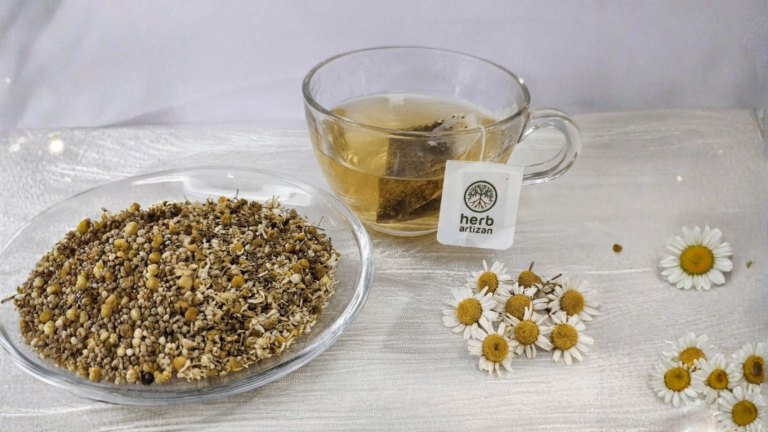
Chamomile Tea
Where the name comes from, how it tastes and what to look for in quality.