How Should the Quality of a Medicinal Plant Be Defined?
Nature has already made these plants perfect. Our job is to make sure we do not mess them up, and to be honest about what science can and cannot yet measure.
- Identity
- Is it really what we think it is? Good tools already exist.
- Purity
- Freedom from contaminants, mostly from human handling after harvest. Easier to measure, but standards need newer tools.
- Potency
- The right strength. The hardest to define, because we still do not know which compounds drive most health effects.
Three pillars of quality
A friend and colleague at USP (the United States Pharmacopeia) recently asked me a basic question: how should the quality of a medicinal plant be defined, in a way that is meaningful and reliable? This post is adapted from my reply.
This subject is as complex as the medicinal plants themselves, and I often feel inadequately equipped to answer it. But here is how I see it.
Nature got it right first
I think that nature has made these medicinal plants perfect already, and we only need to see that we do not mess them up before using them for our health benefits.
At a broader level, ensuring accurate botanical identity (is it really what we think it is?), high purity (freedom from contaminants emerging mainly from human activity) and appropriate potency seem to be the "only things" that we can do to ensure quality.
Three things we can control
Safety and efficacy are beyond the scope of pharmacopoeia quality and official standards. Both are inherent functions of the plant's chemistry and the effect of that chemistry on the human body. I think it is best to focus on identity, purity and potency only, even in future monographs.
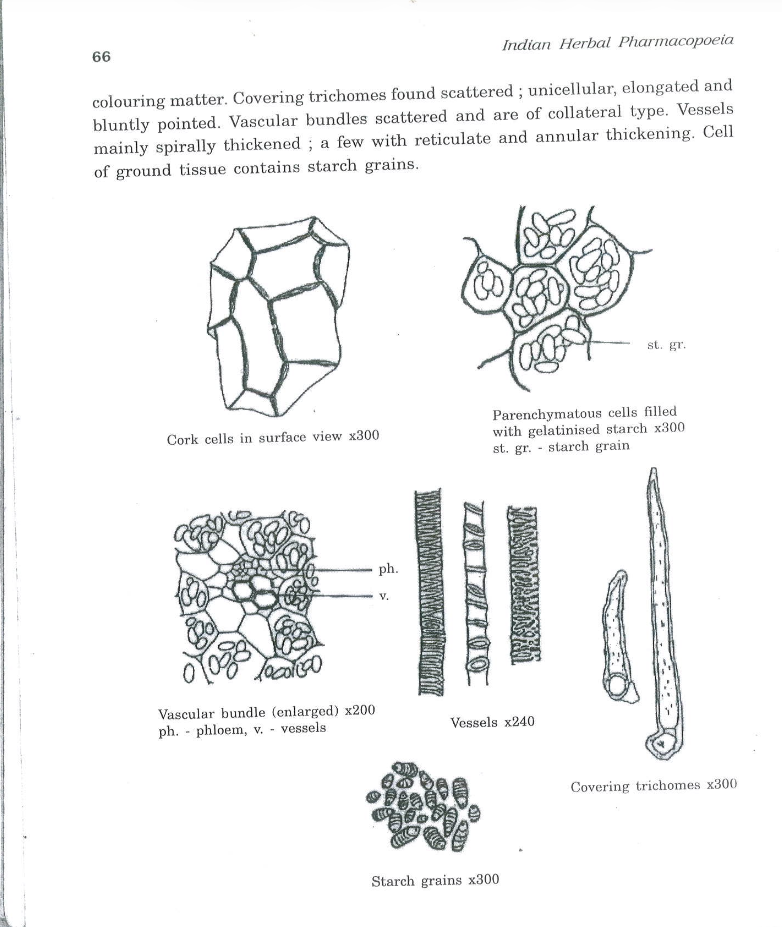
There are adequate tools available for ensuring identity. There is some room for improvement in how we assess purity. The most challenging one is potency.
Most of these botanicals are consumed for a variety of health benefits, both as dietary supplements and as herbal drugs. Yet the knowledge of what governs their therapeutic potency is still missing.
For many decades, chemists have concerned themselves only with identifying the compounds present in medicinal plants or their extracts. Biologists have focused only on the effect of these mixtures on the human body. There have been very few "combined efforts" where the disciplines come together to link a botanical's constituents with its biological effects. This has not changed much over the last three to four decades.
Even today, we may know hundreds of compounds in a plant, but which of those compounds are responsible for the desired biological effects is still largely unknown.
Why the whole herb matters
Under these circumstances, holistic fingerprints need to evolve as a possible solution. This is especially true for systems based on traditional knowledge, which tend to treat the entire herb or preparation as the active, rather than a few specific compounds.
The European Pharmacopoeia takes the approach that a plant extract should be called standardised only when its active is clearly known and can be adequately controlled by adjustments. Otherwise, most extracts are merely well-analysed extracts, not standardised extracts. This definition of standardisation is unique to the European Pharmacopoeia. The Indian Pharmacopoeia and USP have chosen to define standardisation quite differently.
Measuring what a plant does, not only what it contains
Botanicals and their preparations are used mainly for their biological effects. So it is tempting to consider in-vitro bioassays as additional tools for quality assessment.
Here again, the mechanisms of action can be numerous. Whole-cell assays tend to give higher-quality information than sub-cellular assays such as receptor binding or ion-channel tests. Testing complex plant mixtures directly on receptors, ion channels or transporters can be misleading, because these tests do not mimic real biology. How the body absorbs, distributes, metabolises and excretes the compounds is generally not covered.
Bioassay-based standardisation has its own limitations. But there are not many options for a holistic quality assessment.
It is better to light a candle than curse the darkness.
Purity starts after harvest
Purity is relatively easier to assess, and official standards need to adopt newer tools for it. Purity is linked with what people do to the plant after harvest, so it should be improved as far as possible.
I do not know how the majority of herbs are handled after harvest in most parts of the world. My experience is limited to what I see in India, in our current supply chains. There is little guidance in the published literature on this. Most farmers and wild collectors do not fully understand what must be done after harvest to keep dried plant material at the quality it needs to be.
Unhygienic handling, storage and transport make most herbal raw material unfit for direct use unless some primary processing is done. People handling herbs are constantly shedding skin and hair, and many of these contaminants are not visible to the eye.
I have been considering the quantification of dead microbes as an overall indicator of hygiene in botanical processing. Invitrogen makes a BacLight assay for this purpose, and we have been exploring its use in our quality management system.
What this looks like for real herbs
The same colleague also asked for our views on three herbs whose pharmacopoeia monographs are being revised. Here is what we shared.
Ginger: count all the pungent principles together
Most of our experience with ginger comes from our parent company, Natural Remedies. There, we bought ginger oleoresin and diluted it to an extract standardised to 5% w/w total pungent principles: the sum of 6-gingerol, 8-gingerol, 10-gingerol and 6-shogaol.
Other compounds, such as gingerdiones, gingerdiols, paradols, zingerone and zerumbone, occur in very small amounts. We do not think measuring them adds value for quality assessment, and we have not come across significant evidence that they drive ginger's major biological effects. Because they occur naturally and are not produced by degradation or excessive heating, we also do not think they should be treated as "negative markers".
The bigger question is 6-shogaol. Current standards set an upper limit on it as a sign of freshness. In our view, ginger's freshness is lost soon after drying, and almost the entire industry uses dried ginger, because extracting fresh ginger is not economically viable. Dried ginger invariably has 6-shogaol above that limit. A limit makes sense only for freshly harvested ginger before drying.
So instead of treating 6-shogaol as a negative marker, we recommend counting it as a desirable compound within total pungent principles, measured by HPLC. That one measure works for both dry and soft extracts, however they are made. For extracts, we suggest a standard of 90 to 110% of the declared label claim, rather than a fixed minimum. For dried ginger, we had earlier proposed not less than 0.6% w/w total pungent principles, harmonised with other pharmacopoeias.
Gymnema: measure the real compounds, not a breakdown product
The usual method breaks gymnemic acids down by hydrolysis and measures the end product. If that hydrolysis is incomplete, the result underestimates the total gymnemic acid content. Other partly degraded compounds may also form, so it is important to verify what is created and not assume a single product.
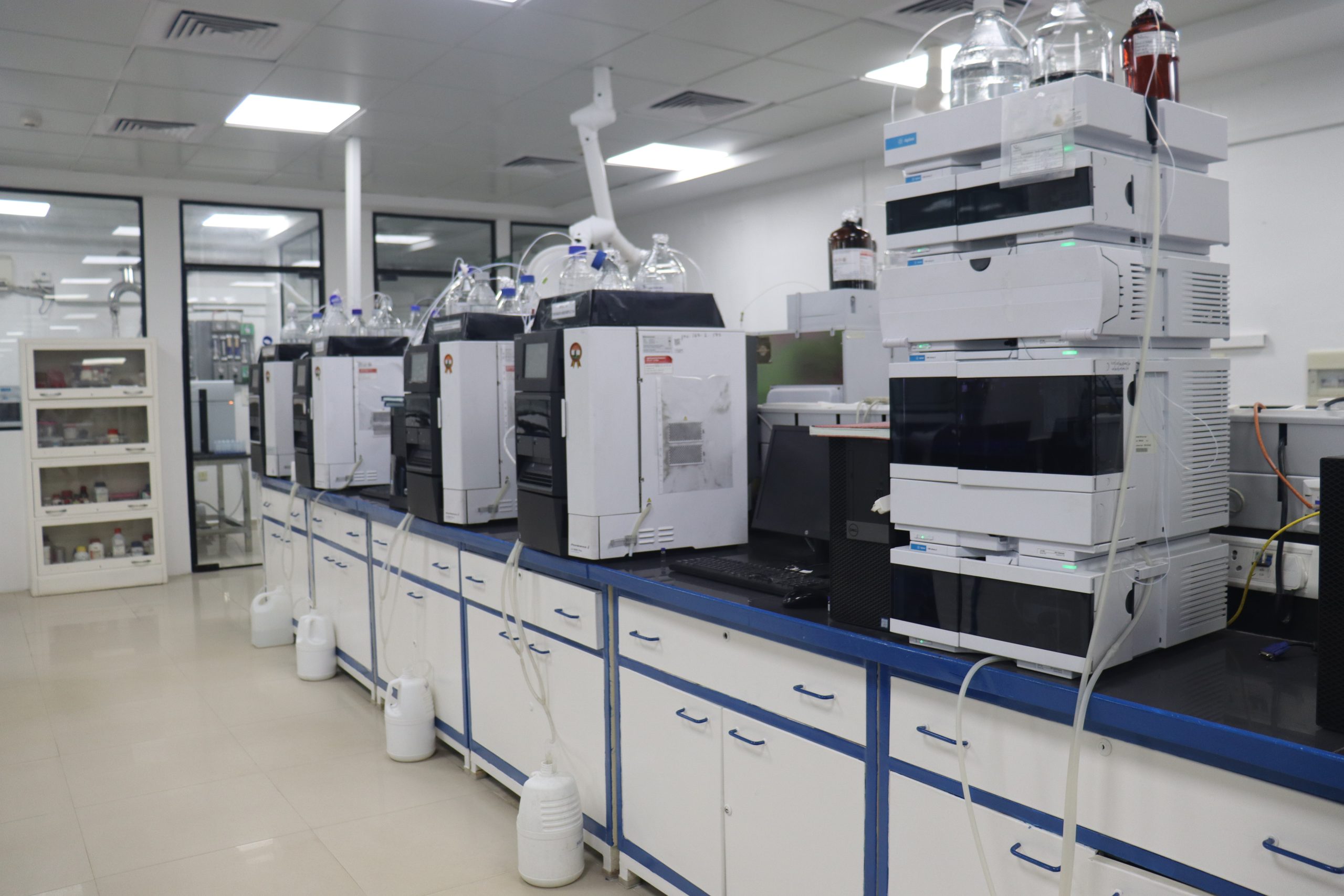
Advanced methods such as LC-MS/MS can give a detailed chemical profile of the intact gymnemic acids, which allows a better assessment of quality. The challenge is that validating such a method needs reference standards of the individual gymnemic acids, and these have been hard to get. We have identified this as one area of collaboration with NIPER Guwahati, along with shatavarins for standardising shatavari roots.
Sophisticated equipment may limit how widely such a method is used. But the herbal industry is used to outsourcing tests, so if commercial labs in most markets can run them, it need not stay a limitation.
Ashwagandha: welcome better methods
USP proposed a revised chromatography method for ashwagandha that separates its withanolides more clearly. We found it far superior and do not expect any challenge in adopting it. When a better validated method becomes available, standards should take it up.
Where we go from here
At Herb Artizan, we have been discussing the need to ask the pharmacopoeia commissions we work with to update the monographs on Indian botanicals. We have also argued that standard setting should factor in post-harvest practices, such as how heat treatment affects some botanicals.
Identity, purity and potency. Two of these we can control well today. The third still needs chemists and biologists working together. Until then, we will keep lighting candles.
Our pharmacopoeia standards
See how we test our botanicals against pharmacopoeia specifications.
Read about Pharmacopoeia QualityKeep reading
When the Soil Comes Back to Life
The science, economics and common sense behind organic farming, from farmers who made the switch.
Chamomile Tea
Where the name comes from, how it tastes and what to look for in quality.
Cinnamon Tea
The history and flavor of cinnamon, and what to look for in quality.